It’s December 1, and the first major snowfalls of the season have already hit the Twin Cities.
For thousands of residents, this means the dreaded "Snow Emergency" dance. But before you pay a $300 impound fee, you need to know your rights under Minnesota's towing statutes.
The "Drop Fee" Rule
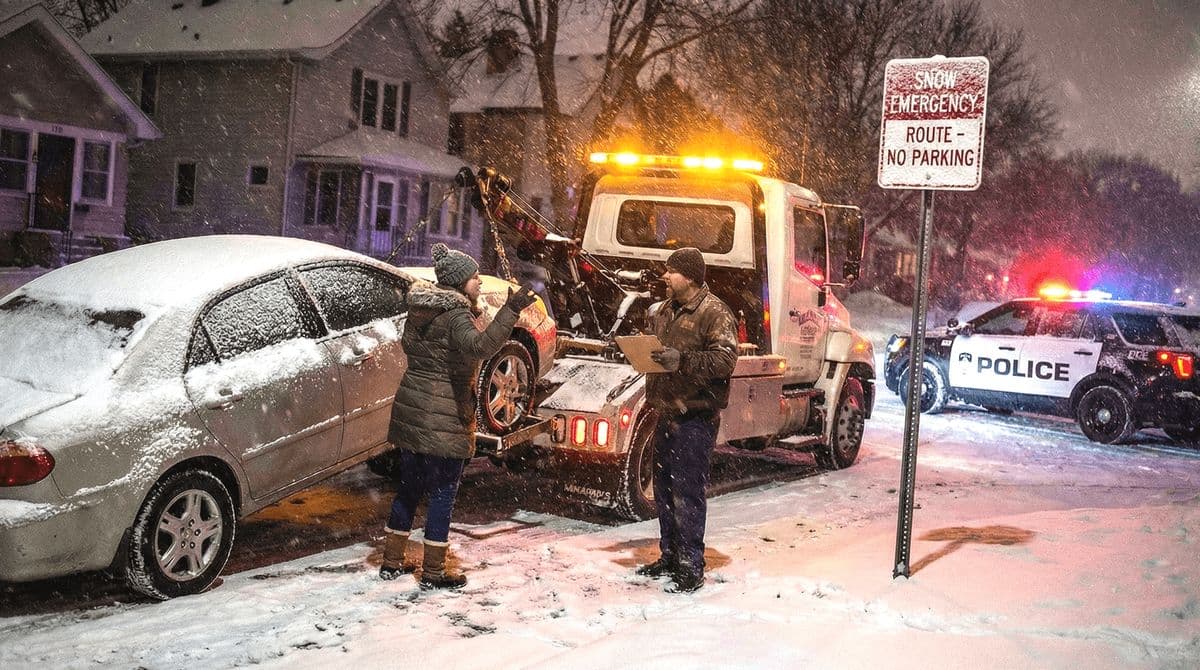
This is the most common dispute we hear about on the scanner. If you arrive at your vehicle while the tow truck is hooking it up but the truck has not yet left the property (or fully entered the public roadway), the operator must release the vehicle to you.
The Catch: You must pay a "drop fee" (typically capped around $50-$100 depending on the city), but they cannot charge you the full tow rate or drag the car away if you are present and willing to move it.
The Catch: You must pay a "drop fee" (typically capped around $50-$100 depending on the city), but they cannot charge you the full tow rate or drag the car away if you are present and willing to move it.
"Tag and Tow"
Under MN Statute 168B.035, police generally must place a citation or warning on a vehicle four hours before towing it for parking violations.
The Exception: This four-hour rule does not apply to Snow Emergencies or rush-hour zones. In a declared Snow Emergency, your car can be ticketed and towed immediately—zero grace period.
The Exception: This four-hour rule does not apply to Snow Emergencies or rush-hour zones. In a declared Snow Emergency, your car can be ticketed and towed immediately—zero grace period.
Retrieving Your Items
If your car is impounded, the lot cannot hold your personal property hostage.
Under Minnesota law, you have the right to retrieve "contents" (medicine, keys, wallet, child seats) from the vehicle during business hours without paying the tow bill first. They can hold the car for payment, but not your insulin.
Under Minnesota law, you have the right to retrieve "contents" (medicine, keys, wallet, child seats) from the vehicle during business hours without paying the tow bill first. They can hold the car for payment, but not your insulin.